
On 23 September 2026, on the margins of the 81st UN General Assembly, the Government of Kenya — through the Ministry of Gender, Culture and Children Services and the Council of Governors — convened a Pan-African High-Level Dialogue on Advancing Quality Childcare Systems, supported by Axum Earth Consulting.
The question on the table was how to make childcare visible, governable and financeable. Perspectives came from Kenya, Ethiopia and South Africa.
Opening the Dialogue, the Cabinet Secretary for Gender, Culture and Children Services, Hon. Hanna Wendot Cheptumo, set the direction: “The case for investing in the early years is no longer in question. What remains before us is the harder task: translating political commitment into systems that deliver quality childcare at scale.”
She set out five areas for partnership. These are to strengthen regulations and standards, invest in the people who deliver care, test integrated solutions with counties, strengthen information and accountability, and mobilise sustainable financing.
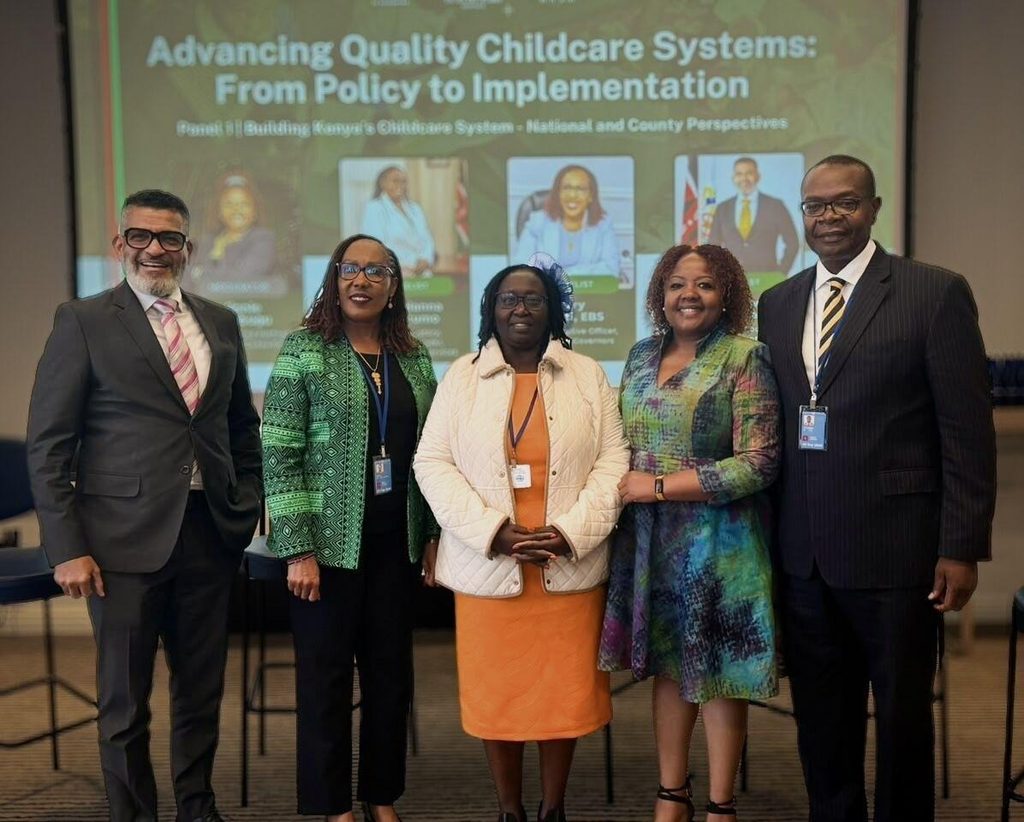
Kenyan national and county leaders at the Pan-African High-Level Dialogue, New York, 23 September 2026. Left to right: H.E. Abdulswamad Shariff Nassir, Governor, Mombasa County; Mary Mwiti, EBS, Chief Executive Officer, Council of Governors; Hon. Hanna Wendot Cheptumo, Cabinet Secretary, Ministry of Gender, Culture and Children Services; Winnie Wambugu, Co-founder and Partner, Axum Earth Consulting (moderator); H.E. Dr. Paul Nyongesa Otuoma, Governor, Busia County.
Clearly, the Kenyan government is leading and our role at NurtureFirst is to work alongside them. Our earlier article on the Global HBCC Alliance covered the global evidence presented in New York. This piece stays closer to home. It draws five lessons from the Kenyan and Pan-African conversations and from a funder roundtable NurtureFirst hosted during the week.
1. Childcare is a public good and essential infrastructure
Childcare benefits reach beyond the child and family to society at large. The quality of care children receive in their first years shapes their brain development, learning, lifelong health and earning potential. Research links quality childcare to less stunting, better school readiness and higher earnings for parents. UN Women’s analysis of childcare in sub-Saharan Africa describes these as long-term benefits for children and society.
Childcare is also essential infrastructure. Like roads, electricity and healthcare, it meets basic needs and keeps society functioning. It allows parents, especially mothers, to go to work. UN Women finds that childcare helps more mothers stay in or take up paid work. It also finds that investing in care creates more jobs than the same investment in construction.
Childcare creates work directly too. In Kenya, we estimate that close to 300,000 providers care for children in their own homes, not counting those in daycare centres. Our mapping found that 98% of providers are women and 38% are single, separated or widowed. Childcare is their livelihood. Thus it contributes to the economy while helping children thrive.
The Government of Kenya brought this framing to New York. In the Cabinet Secretary’s words: “Childcare is not merely a service to families. It is essential social and economic infrastructure.” Childcare is not a cost where money is sunk. It is an investment in children’s development, parents’ work and providers’ incomes. It drives economic development.
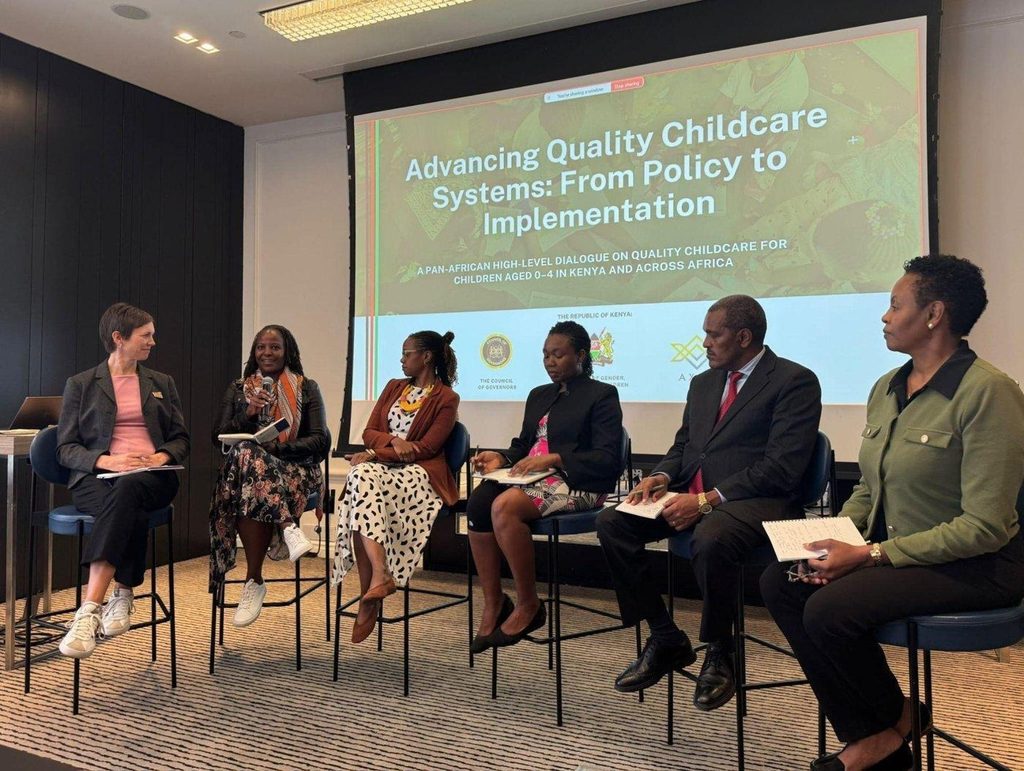
Panel discussion at the Pan-African High-Level Dialogue, New York, 23 September 2026. Left to right: Rebecca Hickman, Chief Ecosystem and Policy Officer, SmartStart (South Africa); Elaine Wacuka-Hurt, Director of Policy and Partnerships, Kidogo; Karungari Wachira, Director of Child Impact, Tiny Totos; Dr. Gacheri Njogu-Ndongwe, Chief Executive Officer, NurtureFirst; Dr. Kebede Worku, Chief Executive Officer, African Center for Early Childhood Development (AfC-ECD), Ethiopia; Joyce Adolwa, Head of Program, Quality and Impact, Save the Children.
Joyce Adolwa of Save the Children highlighted the high cost of failing to invest in childcare and early learning. Research in The Lancet bears this out. Not providing even one year of early childhood care and education for every child costs societies an estimated 8 to 19 times what it would cost to provide it. That investment would cost low- and middle-income countries less than 0.15% of their GDP on average. The World Bank’s Human Capital Index estimates that a child born today will reach only 56% of their full adult productivity because of risks to their health and education. Thus quality childcare is a cornerstone of a nation’s human capital and economic development.
2. Home-based childcare already exists at scale, and its workforce is the asset
Home-based childcare is not a model waiting to be built or a pilot waiting to be scaled. It already operates at scale around the world.
In Kenya, NurtureFirst’s mapping in Kisumu, Murang’a and Mombasa counties reached 5,350 providers caring for 21,784 children. That was only a sample of the providers operating. In Murang’a, the mapped providers alone cared for about one in nine children aged one to three. Most children in these settings are in this age group. They have aged out of routine health contacts but have not yet started pre-primary school at four; this leaves them in a policy blind spot. Half of the children mapped get most of their daily food in these settings. Home-based childcare therefore offers governments a critical entry point to monitor children’s development and reach them with services through their providers.
Providers are the system’s greatest asset. We found that 70% of those mapped feel respected in their communities. Further, 90% want training in early childhood development, but only 3% are aware of any training opportunity. Demand for support exists but the support is not yet reaching them.
Kenya does not need to build a new system from scratch. Its network of providers is already extensive, trusted and used by families. The next step is to recognise, support and professionalise it. The government’s second priority for partnership points the same way. It calls for investing in the people who deliver care through training, mentoring and progressive registration. The Cabinet Secretary’s remarks were explicit: “Home based and community care must be included in this effort. Standards should protect children while giving existing providers a realistic path to meet them.”
The government is also investing in ECD classrooms and in care centres in schools and markets. We welcome this. Centre-based and home-based care are not in competition. Children and families need both. But care is already happening in homes today. Investments towards quality must be directed wherever children already are, through standards, training and support for providers, and not through buildings alone.
3. Data makes a system visible and informs action
The Principal Secretary for Children Services, CPA Carren Ageng’o, highlighted data as critical at the Dialogue. Of the providers we mapped, only 71 (about 1%) were registered with their county government. The rest are invisible to the systems meant to support them. Our mapping report identifies the lack of reliable data on the scale, quality and users of home-based childcare as a major reason for under-investment. The report has helped bring these providers into view and shows the gaps and opportunities for policy and programming.
Programme data shows what works in a project. Governments also need population-level data. This means knowing where children are cared for, the quality of that care, children’s development outcomes, how care is financed, and where the gaps and vulnerabilities lie. Registries of providers and services are part of this. Strengthening information and accountability is one of the government’s five areas for partnership. The Cabinet Secretary called for a shared picture of childcare provision, the children it reaches, workforce needs and service quality, while respecting privacy and safeguarding children.
Data should also track the impact of childcare beyond child development. This includes maternal labour force participation, household incomes and providers’ financial resilience.
Data also answers a fair question from county leaders: how do we account for public money spent in settings we cannot yet see? Registration and data systems provide the answer. NurtureFirst is working with the County Government of Mombasa to pilot quality standards and non-punitive registration and licensing, aligned with national standards now in development.
New tools can help. Artificial intelligence can model where vulnerability is greatest. Tiny Totos highlighted its value in improving programmes and refining materials. Joyce Adolwa of Save the Children cautioned that children must be protected from its risks.
4. Quality comes at a cost, but doing nothing costs even more
Quality cannot improve without investment. Today that investment is small and mostly misses the youngest children. In 2021/22 Kenya spent KSh 10.2 billion on early childhood development education. That is about 1.8% of its education budget, against the 10% benchmark urged by the 2022 Tashkent Declaration. County spending on early childhood in 2023/24 went almost entirely to pre-primary education for children aged four and five. Only four counties referenced childcare facilities as distinct programmes.
The fifth area for partnership shows how this can change. It aims to make care affordable without compromising standards. The tools include the Child Welfare Fund, county-level costing of quality services and results-linked financing. The Fund starts with an initial KES 2 billion commitment, against a proposed KES 18 billion envelope. Social cash transfers offer another route. Busia Governor H.E. Dr. Paul Otuoma highlighted their success in reaching communities. Kenya’s cash transfer programme for orphans and vulnerable children already reaches about 443,000 households and 1.73 million children. Countries use social cash transfers to help finance childcare, and Kenya could do the same.
Financing childcare is broader than paying providers. It also encompasses nutrition, learning materials, curricula, training and support that helps families pay for care.
Doing nothing is not free. Children pay through poor nutrition and too little early stimulation in their most critical years. This harms their development and school readiness. Women pay in lost work and income.
5. Making the case for long-term investment
Sustaining this work takes patient investment. The case for it must be made clearly: why home-based childcare matters, why systems change matters, and why both need long-term funding.
Systems change is hard to fund. It is slow, its results are hard to attribute to one organisation, and government timelines are unpredictable. Yet systems are what allow programmes to run and services to reach people. They endure beyond any individual or organisation. The case can be made in practical ways. It requires telling the story of home-based childcare clearly, because much of what it delivers goes unseen. We must track proxy measures that show progress early, and use the Nurturing Care Framework as a shared reference for quality. It’ll also mean testing and improving programmes with the government, and learning from what fails as well as what works.
The case is stronger still when it shows that investment benefits parents and children together. It is not just one or the other.
No single organisation needs to produce all the evidence. NurtureFirst’s role includes showing that home-based childcare is already in use at scale, and the opportunities that it provides for child development, provider livelihoods and women’s work. We support policy and systems change so that home-based childcare is visible, supported and sustained. We work with partners, including members of the Global HBCC Alliance, to mobilize policy and funding and to share evidence or generate it where needed.
The Cabinet Secretary stated: “Our measure of success will be safer and more nurturing care for children, stronger families and greater opportunities for those who care for them.” This is our goal.
Success is multifaceted, impacting children, their families, providers, and the society at large.
For children, success means access to quality childcare that supports all dimensions of nurturing care, including health, nutrition, responsive caregiving, safety and protection, and early learning and stimulation. This enables children to thrive and reach their developmental potential, resulting in improved child development outcomes.
For families, success means access to trusted, quality, affordable and convenient childcare that meets their needs. This enables parents, especially mothers, to participate in education and paid work, increasing maternal labour force participation, household income and family wellbeing.
For childcare providers, success means having the skills, resources and support needed to deliver quality childcare, alongside recognition and integration within the broader early childhood system. It also means access to sustainable and dignified livelihoods through their work.
For the government, success means ensuring equitable access to quality childcare and achieving positive outcomes for children, families and providers at scale. This requires enabling policies and standards, sustainable financing, effective delivery pathways, and systems to monitor service delivery and population-level outcomes.
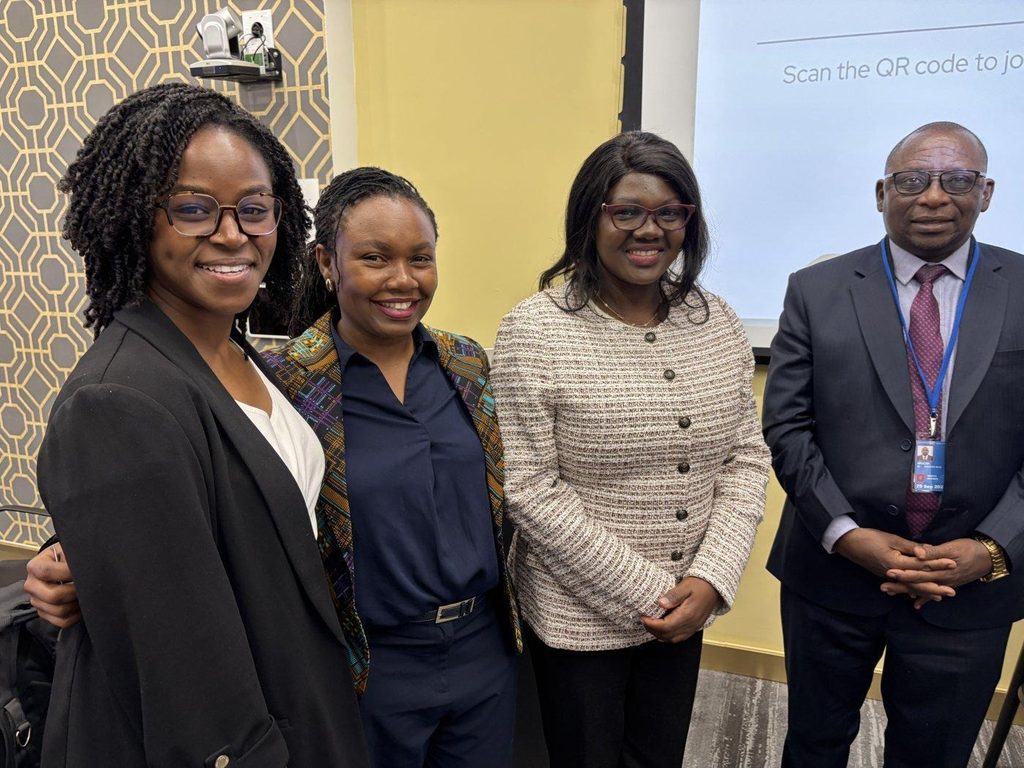
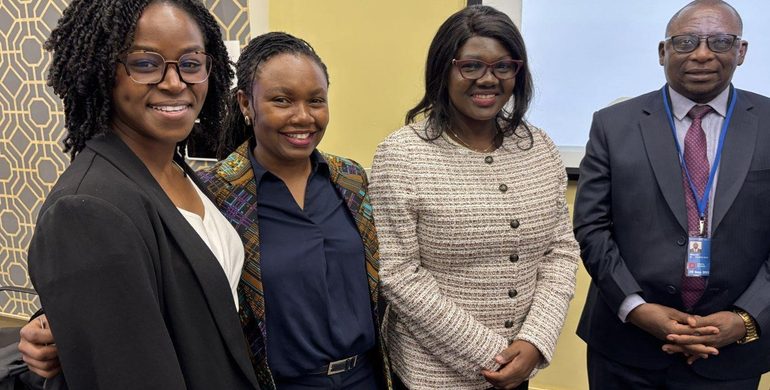
NurtureFirst team with Kenya government counterparts, New York, September 2026. Left to right: Leah Justina Anyanwu, Secretariat Lead, Global HBCC Alliance; Dr. Gacheri Njogu-Ndongwe, Chief Executive Officer, NurtureFirst; CPA Carren Ageng’o, Principal Secretary, State Department for Children Services; Mr. Migosi, Director of Children’s Services.
What comes next
The work now is delivery. That means standards providers can meet, registration they can access, data systems counties can use and financing that reaches the places where children are cared for every day. NurtureFirst will continue to support the government, alongside counties, providers and partners.
The next milestone is the Global Early Years Financing Summit in July 2027, where governments make commitments. Kenya and its African peers have a strong story to bring: a care system that already exists, a workforce ready to grow and governments ready to lead. We hope to see specific resources committed to the priorities the government has set out. We look forward to working with the government to support that process.
