
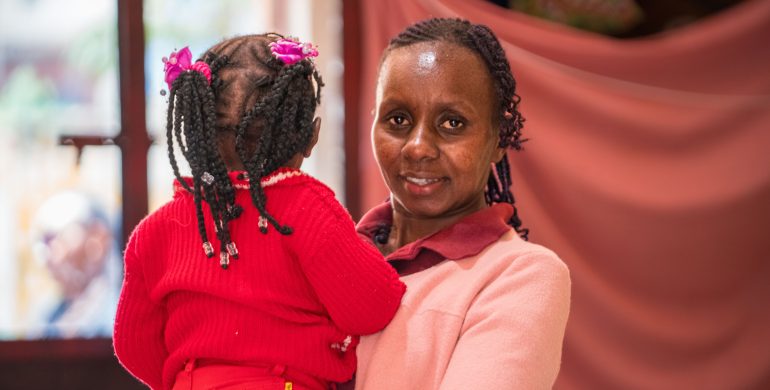
Every morning across Kenya, parents leave their young children with a neighbour before going to work. In Murang’a, most children spend the day hearing and speaking Kikuyu. In Kisumu, they hear and speak Dholuo. In Mombasa, Kiswahili. They hear the songs, nursery rhymes and stories of their community, play the games their parents played, and eat familiar food. In the evening, they go home to the same language. The neighbour’s home becomes a second home.
This is home-based childcare. Across Kenya, we estimate that over 300,000 providers care for more than 1.5 million children aged 0–3 in their own homes while their parents work or study. Some of these children are less than a year old. Home-based childcare is a culturally resonant, community-driven and organically scaled form of care, trusted and used by families around the world. It is common in rural and urban areas alike. In 2025, we conducted Kenya’s first comprehensive mapping of home-based childcare. In Murang’a, where only about one in ten residents lives in an urban area, the providers we mapped care for about one in nine children aged one to three.
Cultural resonance
Families choose a neighbour because they know her. She speaks their language. She cooks the food they eat at home and keeps the rhythm of family life. She knows their culture, their way of life. Children of different ages learn together, as they would at home. Our mapping report found that many providers begin providing care out of a sense of duty to their community. In Kisumu, 77% did not regularly charge for their care, pointing to “a strong ethos of care and communal responsibility”.
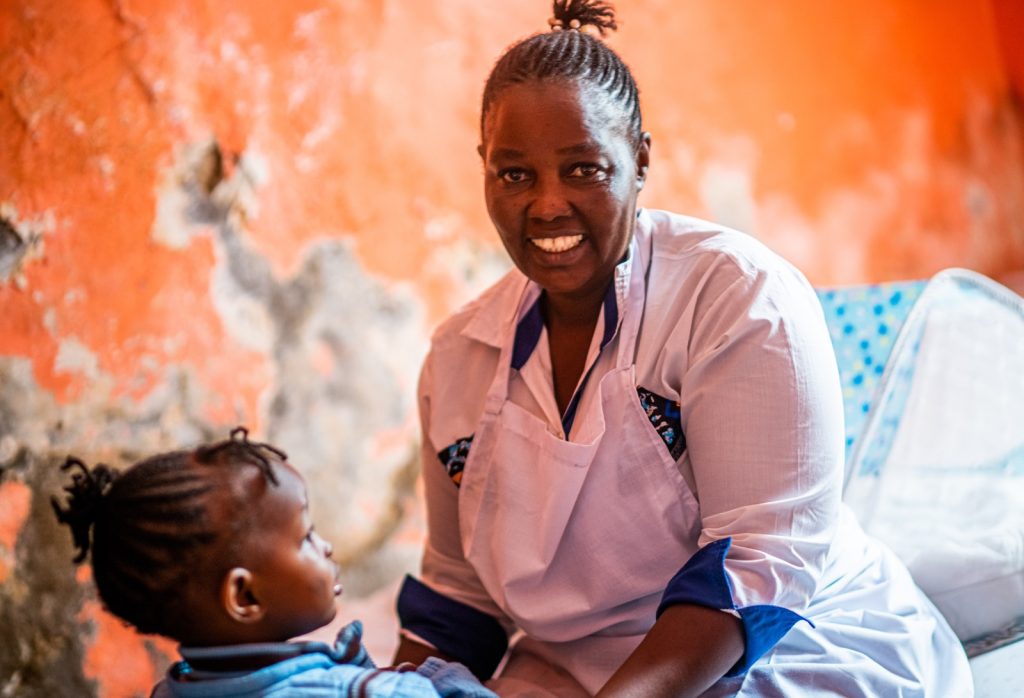
This matters for learning. UNESCO’s long-standing guidance is that children learn best in their mother tongue, and that it should be well developed before they move to a second language. Yet an estimated 40% of children worldwide are not accessing education in their mother tongue. The UN has declared 2022 to 2032 the International Decade of Indigenous Languages, with UNESCO in the lead. In Kenya, a neighbour’s home is often the first place outside the family where a young child spends the day, hearing and speaking their own language.
One ministry, two mandates
Kenya has placed both children’s services and culture in the same ministry: the Ministry of Gender, Culture and Children Services. Its culture department is charged with promoting and preserving Kenya’s heritage, including developing indigenous languages. The State Department for Children Services, through its family promotion and child development work, is strengthening the childcare system for children up to the age of four. Home-based childcare is where both mandates meet. Through songs, nursery rhymes, stories and games, providers are already building children’s language and passing on their culture. They are contributing to the ministry’s goals for culture and for children.
At the Pan-African High-Level Dialogue in New York in September 2026, the Cabinet Secretary, Hon. Hanna Wendot Cheptumo, called childcare “essential social and economic infrastructure”. She proposed testing quality care “in settings families already use, including home based care”, and said standards should give “existing providers a realistic path to meet them”.
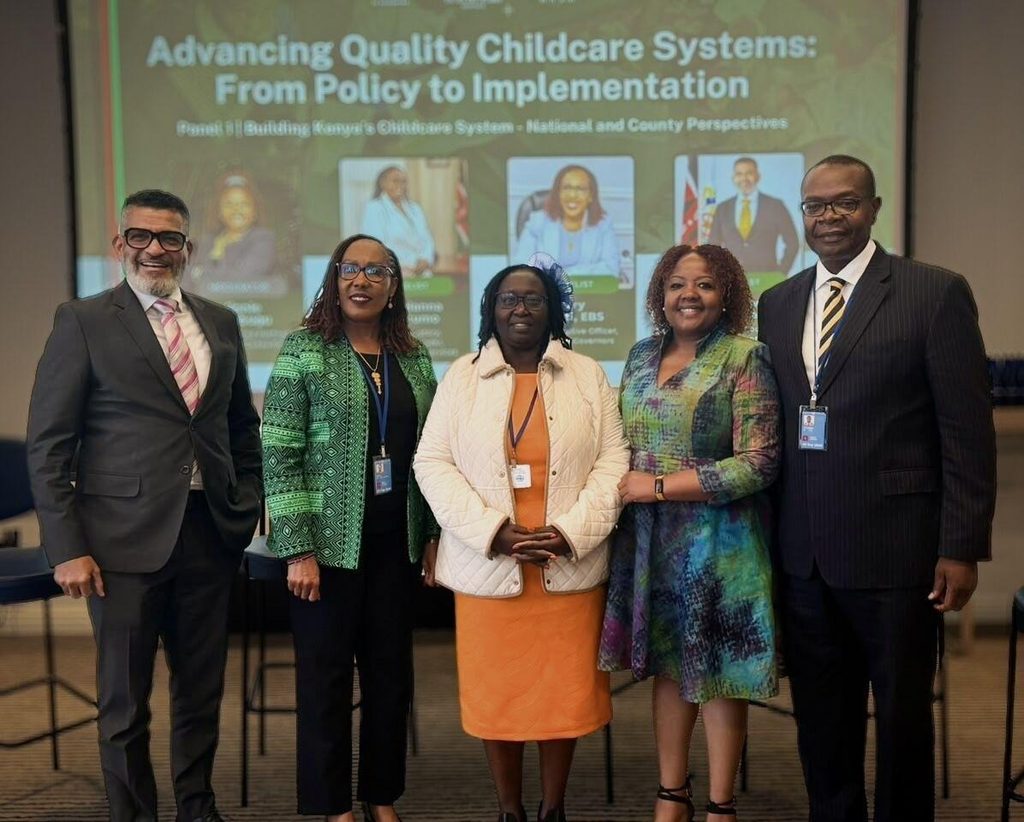
H.E. Abdulswamad Shariff Nassir, Governor, Mombasa County; Mary Mwiti, EBS, Chief Executive Officer, Council of Governors; Hon. Hanna Wendot Cheptumo, Cabinet Secretary, Ministry of Gender, Culture and Children Services; Winnie Wambugu, Co-founder and Partner, Axum Earth Consulting (moderator); H.E. Dr. Paul Nyongesa Otuoma, Governor, Busia County
These are care workers
October 29 marks the International Day of Care and Support. This year, Kenya marks it with a national celebration at KICC in Nairobi, led by the State Department for Gender Affairs and Affirmative Action, with partners including NurtureFirst. The women who keep home-based childcare going are care workers. Of the providers we mapped, 98% are women, and 38% are single, separated or widowed. According to the Kenya Time Use Survey 2021 by the Kenya National Bureau of Statistics, Kenyan women spend four to five hours a day on unpaid care, compared with about one hour for men. Only 1% of the providers we mapped were registered, and only 3% were aware of any training opportunity. Kenya’s National Care Policy aims to recognise, reduce and redistribute unpaid care work. These providers are among the first it should recognise.
Building on what families trust
In our HBCC mapping report, we recommend that providers be recognised as culturally resonant caregivers and frontline early childhood workers. While the financial dimension should not be downplayed, a rigid business framing risks undermining what motivates providers. Support should strengthen their caregiving role without stripping away what families value in it.
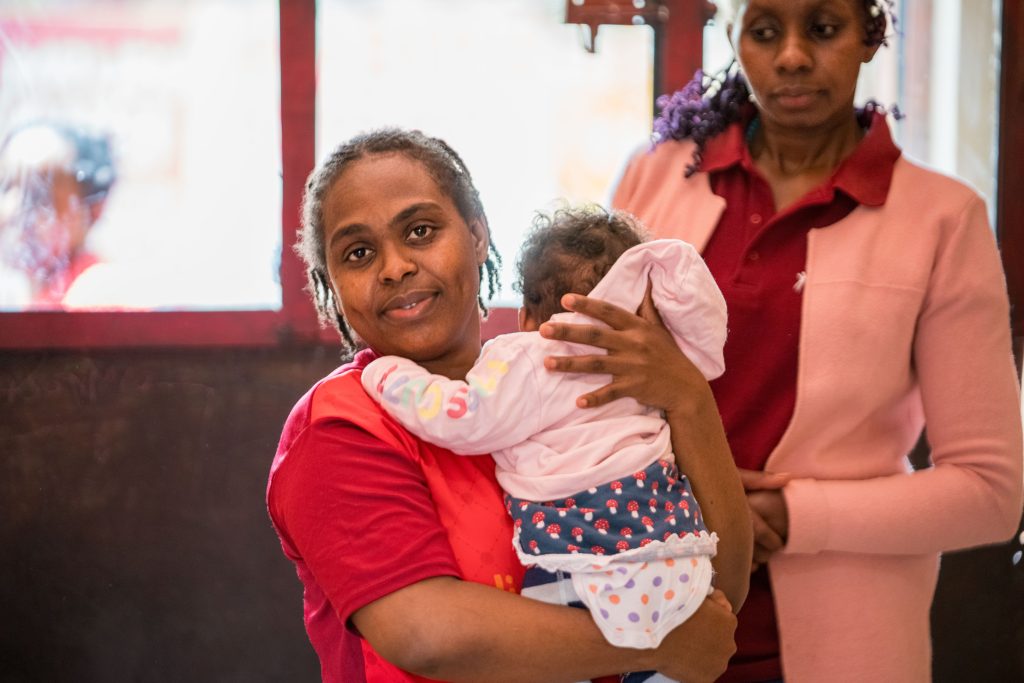
Janita Wachira, an assistant home-based childcare provider in Murang’a County
We hope the government’s next steps reflect this. Training and quality standards can be offered in local languages and build on the songs, stories and food providers already use. Providers who are less fluent in Kiswahili or English should not be held back by training offered only in those languages.
The Child Welfare Fund, being set up with an initial KES 2 billion, should include home-based childcare. The 1,393 children officers across 370 sub-counties can reach the homes where young children spend their days and be part of the support and oversight around them. The culture and children’s departments can work together so that the care already keeping languages alive is counted and supported.
As the government leads this work, NurtureFirst will keep working alongside the Ministry, the Council of Governors and county governments to advance quality, recognition and support for HBCC providers.
Every young child should have access to nurturing, safe and enriching environments where they can thrive, regardless of income, geography or family circumstance. For many Kenyan children, that environment sounds just like home.
Join us in elevating home-based child care.
